1. **The Future of Tech: AI, Blockchain, and the Quantum Leap You CAN’T Ignore!** (61 characters)
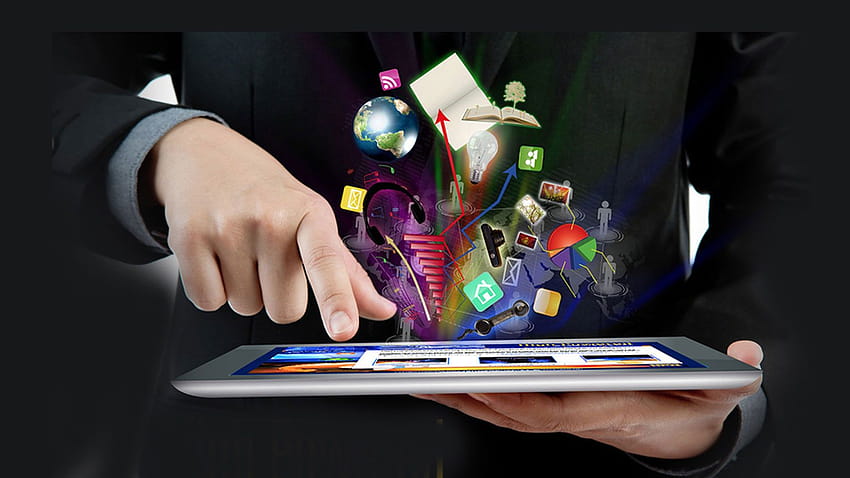
The world of technology is accelerating at an unprecedented pace. From artificial intelligence transforming industries to the revolutionary potential of blockchain and the mind-bending possibilities of quantum computing, staying ahead of the curve is no longer an option – it’s a necessity. This isn’t just about gadgets and software; it’s about how these advancements are reshaping our jobs, our lives, and our very future. Are you ready to unlock the secrets of tomorrow’s tech, today?
## Beyond the Hype: What’s *Really* Happening in AI?
Artificial intelligence is no longer science fiction; it’s a fundamental shift in how we operate. AI is revolutionizing data analytics, making processes faster and insights sharper than ever before. Imagine cleaning vast datasets in a fraction of the time, uncovering hidden patterns that were previously invisible, and making decisions with pinpoint accuracy. Generative AI, in particular, is making waves, from creating visual content for marketing to powering sophisticated language models. This isn’t about AI replacing humans; it’s about AI augmenting our capabilities, freeing us up for more complex, creative, and strategic tasks. The key to harnessing AI’s power lies in robust governance, ensuring data privacy, mitigating bias, and fostering trust through transparency. As AI continues its relentless march, expect it to become even more integrated into our daily lives, from personalized recommendations to advanced scientific discovery.
## Blockchain: More Than Just Crypto – It’s Building Trust!
While many associate blockchain with cryptocurrencies, its true power lies in its ability to build trust and transparency in a decentralized manner. Blockchain technology is poised to reform industries beyond finance, including music, pharmaceuticals, and social media. Its applications extend to enhancing cybersecurity, ensuring data integrity, and streamlining supply chains. Imagine a world where transactions are secure, immutable, and free from intermediaries, leading to greater efficiency and reduced costs. The future of blockchain is one of increased interconnectivity, pragmatic governance, and the fusion with adjacent technologies to create unprecedented advantages. Whether it’s securing digital identities or enabling transparent supply chains, blockchain is quietly revolutionizing how we interact and transact.
## Quantum Computing: The Next Frontier is Here (And It’s Mind-Bending!)
Quantum computing, once a theoretical dream, is rapidly becoming a tangible reality. With breakthroughs in qubit stability, error correction, and outperforming classical computers, the quantum realm is opening up new possibilities. While a fully error-corrected quantum computer with millions of qubits might still be a ways off, significant strides are being made. Researchers are developing schemes that could drastically reduce the number of qubits needed, bringing us closer to fault-tolerant quantum computing. The implications are staggering: accelerating drug discovery, optimizing global supply chains, advancing material science, and securing digital infrastructure. Companies like Google and IBM are at the forefront, developing hardware and software tools to push the boundaries of what’s possible. The race is on to harness this immense computational power, and the first to achieve true quantum advantage will unlock a new era of innovation.
## The Connected World: 5G, IoT, and the Rise of Wearables
The interconnectedness of our world is rapidly expanding, fueled by the evolution of 5G networks and the proliferation of the Internet of Things (IoT). 5G technology offers unprecedented speeds, lower latency, and massive connectivity, enabling a new generation of applications. This enhanced connectivity is the backbone for the ever-growing IoT ecosystem, where everyday objects are embedded with sensors and software to collect and exchange data. From smart homes that anticipate our needs to smart cities that optimize traffic flow and resource management, IoT is transforming our environments.
Wearable technology is a prime example of this interconnectedness, moving beyond fitness tracking to advanced health monitoring and even workplace applications. Imagine smartwatches and rings that provide real-time health insights, alert you to potential issues, and offer personalized wellness coaching. The integration of AI is further revitalizing wearables, enabling features like health scoring and conversational virtual assistants. These devices are not just accessories; they are becoming indispensable tools for proactive health management and enhanced daily living.
## Sustainable Tech: Building a Greener Future, One Innovation at a Time
In an era of increasing environmental awareness, sustainable technology is no longer a niche market but a critical imperative. Solutions focused on reducing carbon footprints, optimizing resource management, and promoting eco-friendly practices are gaining momentum. AI-driven ESG reporting, IoT for resource monitoring, and advancements in clean energy are just a few examples of how technology is being harnessed for a greener future. From developing alternative livestock feeds to creating carbon-capturing microbes, innovation is key to mitigating climate change and ensuring a sustainable planet for generations to come.
## The Expanding Horizons of AR/VR
Augmented reality (AR) and virtual reality (VR) are transcending entertainment to become powerful tools for education, training, and design. AR overlays digital information onto the real world, enhancing our perception and enabling new ways to interact with our surroundings. VR, on the other hand, creates fully immersive digital environments, offering unparalleled experiences for learning and simulation. As AI integrates with AR/VR, the possibilities multiply, leading to more sophisticated and intuitive applications in fields like urban design, infrastructure planning, and remote collaboration.
## What Does This Mean for YOU?
The technological landscape is shifting at an astonishing speed. AI is democratizing data insights, blockchain is rebuilding trust, and quantum computing promises to unlock solutions to problems we can’t even fathom today. The connected world, powered by 5G and IoT, is bringing everything closer, while wearables and AR/VR are changing how we experience information and interact with our environment. And underpinning it all is a growing commitment to sustainable technology, ensuring that innovation benefits both humanity and the planet.
The question isn’t *if* these technologies will impact your life, but *how* you’ll leverage them. Staying informed is your first step. The next is to adapt, to learn, and to embrace the incredible potential of what’s to come.
### Frequently Asked Questions (FAQs)
What is the biggest emerging trend in technology right now?
Artificial Intelligence (AI), particularly generative AI, is currently the most significant emerging trend, impacting everything from data analytics to content creation and scientific discovery. Its ability to augment human capabilities and drive efficiency across industries makes it a transformative force.
How is blockchain technology different from traditional databases?
Blockchain technology offers a decentralized, immutable, and transparent ledger of transactions, unlike traditional databases which are typically centralized and can be more easily altered. This inherent trust and security makes blockchain ideal for applications requiring a high degree of data integrity and auditability.
Will quantum computers replace my current computer?
Quantum computers are not expected to replace traditional computers for everyday tasks. Instead, they are designed to tackle highly complex problems that are currently intractable for even the most powerful supercomputers. Think of them as specialized tools for specific, advanced challenges in fields like scientific research, cryptography, and AI.
What are some practical applications of the Internet of Things (IoT)?
Practical IoT applications are widespread and include smart homes that automate lighting and temperature, smart cities that optimize traffic and waste management, connected cars for improved safety and efficiency, and smart agriculture for precision farming. Wearable devices for health monitoring are also a significant IoT application.
How is Augmented Reality (AR) different from Virtual Reality (VR)?
Augmented Reality (AR) overlays digital information onto the real world, enhancing your existing environment. Virtual Reality (VR), on the other hand, creates a completely immersive, computer-generated environment that replaces your real-world surroundings.